There is a quiet magic in the waning moon. As its silver light fades from the night sky, it invites us to release everything that no longer serves us — especially the invisible clutter that fills our minds. In a world that constantly demands more attention, more doing, more holding on, the moon reminds us that letting go is also a sacred act. This simple, powerful 3-step ritual will help you align with that ancient rhythm and clear your mental space with intention and grace.
Why the Waning Moon Invites Release
Every lunar cycle is a journey. The new moon is a seed, the waxing moon is growth, the full moon is bloom, and the waning moon is the exhale — the quiet descent after the peak of illumination. As the moon's light withdraws, it symbolically pulls away the layers that are ready to fall. In astrology, the waning phase speaks to the element of surrender, of releasing control, of composting what is finished.
Mentally, we accumulate so much: unfinished tasks, old worries, resentments, plans that never materialized, endless streams of internal commentary. Science tells us that an overstimulated brain becomes foggy and reactive; energetically, it is the same. We carry subtle attachments to expectations, identities, and outcomes that clutter our inner horizon. Without conscious release, these become sediment in the mind, clouding clarity and draining energy.
The waning moon offers a natural pause in the cosmic rhythm — a perfect window to sweep out the mental debris and restore inner order. It is not about punishing yourself for being busy; it is about honoring the part of you that deserves spaciousness.
"As the moon wanes, it teaches us the art of surrender — not as defeat, but as the highest form of wisdom."
Preparing the Ritual Space
This ritual is designed to be simple, safe, and accessible. You will need: a pen, a piece of paper, a lighter or matches, and a fire-safe bowl or dish. If you prefer not to burn anything, you can substitute with tearing, water, or burying. The essence is the intention, not the tool. Find a quiet spot where you will not be interrupted, and if possible, perform the ritual in the evening, under the open sky or by a window where you can see or sense the moon.
Step 1: Acknowledge and Name What You Carry
You cannot release what you do not name. Find a quiet space and sit comfortably. Light your candle and take three deep breaths, letting your shoulders drop and your mind settle. Now, allow a list to form: What is occupying mental space right now? It can be a recurring anxiety, a task you keep avoiding, a conversation you replay at night, an obligation that drains you, a belief that whispers you are not enough. Write everything down without self-censorship. Let the paper hold the weight.
As you write, notice the sensations in your body. Do you feel tension in your jaw? A knot in your stomach? A heaviness in your chest? These are signals from your system that something has overstayed its welcome. You are not judging or fixing — you are simply uncovering what has become too heavy.
Step 2: A Burning Release
When your list is complete, hold the paper in both hands. Close your eyes and breathe into each word you have written, acknowledging its presence in your life. Then, make the intentional decision to let it go. If you are using a fire-safe bowl, carefully light the paper from a corner and place it in the bowl, watching it transform into flame and smoke. As it burns, say aloud: "I release what no longer serves me." Repeat the phrase as many times as needed. The fire consumes, but it also purifies — and the smoke rising into the night air carries away what you have set free.
If you cannot burn the paper, you can tear it into tiny pieces and let them fall into a river or stream, or bury them in soil, letting the earth absorb what you have released. Running water washes, soil transforms, and the intention remains the same. Afterward, take a moment to feel the shift — the space that has just opened up inside you.
Step 3: Sit in the Silence
The final step is to receive the newly created space. This is not about filling the void with new thoughts, but about allowing yourself to be in the stillness. Sit upright but relaxed, close your eyes, and bring your attention to your breath. Notice how the air enters and exits effortlessly. Let any remaining thoughts drift by without attachment.
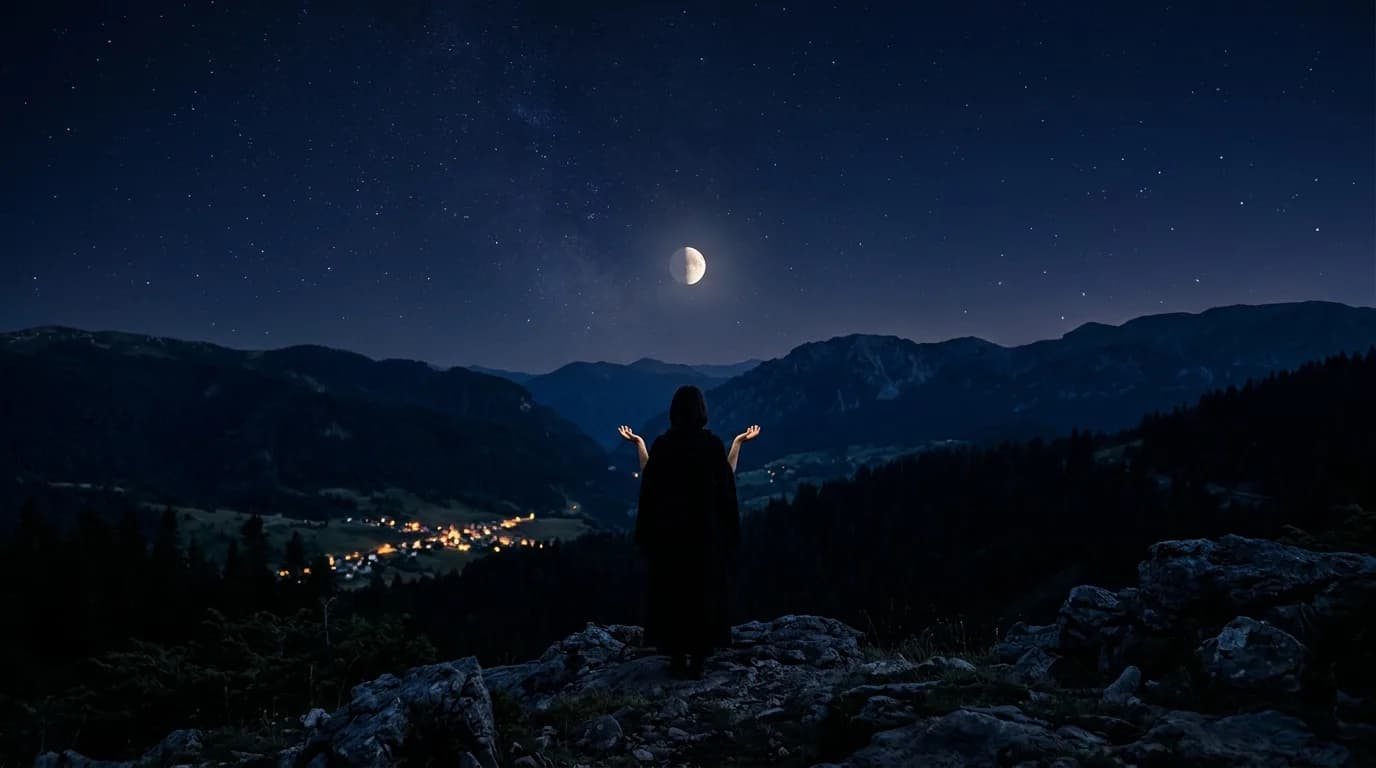
You can deepen the practice with a simple visualization: imagine the waning moon in the dark sky, its soft crescent light bathing you in a quiet glow. With every exhale, feel yourself letting go a little more. If certain emotions arise — sadness, relief, anger — let them move through you without resistance. Repeat the mantra "I am lighter, I am free, I am present" until it settles into your bones. Stay for as long as feels nourishing; even five minutes is enough.
When you are ready, thank the moon for its guidance. If you lit a candle, blow it out. Notice how the space around you feels clearer than before. You have not only cleared mental clutter — you have practiced the sacred art of release.
Weaving the Ritual into Your Lunar Practice
You can perform this ritual any night during the waning phase, from the day after the full moon to the night before the new moon. The most potent time is the last three days before the new moon, when the sky is almost dark and the act of letting go feels most complete. Make it a monthly habit. With each cycle, your mental home becomes more spacious and more aligned with your true self.
"The moon does not fight the darkness; it simply teaches us how to navigate it."
This ritual is not about fixing yourself — you are already whole. It is about returning to the natural rhythm of being human: every season has its ending, every breath its release, every moon its waning. The magic lies not in doing more, but in allowing. Let the waning moon be your gentle ally, guiding you home to yourself.
Explore the topic further: Moon calendar
AI-generated content — for entertainment purposes only, not professional advice.AI safety